
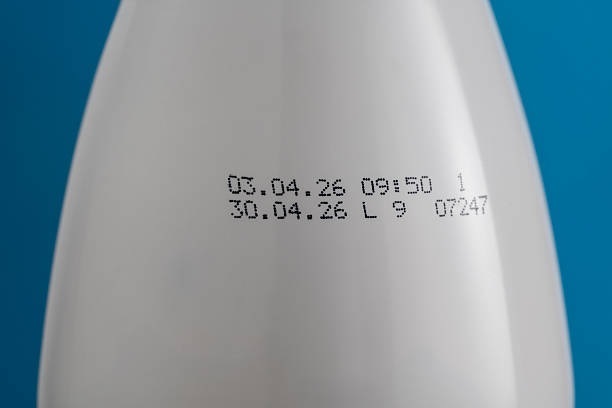
PET plastic bottles are widely used as packaging for mineral water, soft drinks, milk, and various liquid products. In the production process, packaging is not only used as a product container. Manufacturers also need to print important information such as production dates, expiry dates, batch numbers, and traceability codes.
Although the printing process may seem simple, it comes with several challenges. The smooth and curved surface of PET bottles, conveyor speed, and production environment can all affect print quality.
For this reason, selecting the right coding machine for PET plastic bottles should be based on the characteristics of the packaging and the requirements of the production line.
Why Is Coding on PET Plastic Bottles Important?
Production codes play an important role in manufacturing and product distribution. These codes help manufacturers identify and track products throughout the supply chain.
Common information printed on PET bottles includes:
- production date;
- expiry date;
- batch or lot number;
- production code;
- product identification code;
- traceability information.
In high-speed production lines, this information needs to be printed automatically and consistently without slowing down the conveyor.
This is why industrial coding machines are generally more suitable than manual printing methods.
Challenges of Printing Codes on PET Bottles
Not all printing technologies deliver the same results when used on PET plastic surfaces.
PET bottles typically have smooth and curved surfaces. These characteristics require a printing technology that can apply codes without direct contact with the bottle.
In addition, beverage production lines may operate in humid or wet environments. For example, bottles that pass through filling and cooling processes may develop condensation.
The printed code must remain clear and readable under these conditions. Smooth and curved surfaces, humid production environments, high production speeds, and code durability are some of the main challenges when coding PET bottles.
Continuous Inkjet for PET Plastic Bottle Coding
One of the most commonly used technologies for this application is the Continuous Inkjet Printer, or CIJ Printer.
Continuous Inkjet is a non-contact printing technology. This means the printhead does not need to touch the surface of the bottle during printing.
This makes CIJ suitable for products moving continuously on a conveyor, including bottles with curved surfaces.
CIJ technology can be used to print various types of variable information, such as:
- production date;
- expiry date;
- batch number;
- lot number;
- production code;
- other product identification information.
For PET plastic bottle applications, Continuous Inkjet is often selected because it can support high-speed production lines and various PET surface characteristics.
5 Factors to Consider When Choosing a Coding Machine for PET Bottles
1. Production Line Speed
The first factor to consider is conveyor speed or the number of products manufactured per hour.
The coding machine must be able to keep up with production speed without creating a bottleneck in the line.
The higher the production capacity, the more important it becomes to use a printer specifically designed for continuous industrial operation.
2. Printing Position
The area where the code will be printed should also be carefully considered.
Codes may be printed on the bottle body, neck, cap, label, or another part of the packaging. The shape and position of the printing area will determine how the printhead should be installed and configured.
For curved surfaces, non-contact printing technology such as CIJ offers greater flexibility.
3. Bottle Type and Color
PET bottles are available in many variations, ranging from transparent to colored bottles.
The contrast between the ink and the bottle surface plays an important role in code readability.
Ink selection should therefore be based on bottle color, surface characteristics, production environment, and application requirements.
4. Production Environment
The production environment should also be taken into account.
In beverage manufacturing, for example, production areas may have relatively high humidity. Bottles may also experience temperature changes or condensation after certain processes.
The coding system and ink should be suitable for actual production conditions so that printed codes remain clear throughout distribution and storage.
5. Maintenance and Technical Support
Machine price should not be the only consideration when selecting a coding system.
Manufacturers should also evaluate:
- maintenance requirements;
- availability of inks and consumables;
- spare parts availability;
- ease of operation;
- technical support;
- long-term operating costs.
Downtime on a coding machine can directly affect production efficiency. Therefore, reliable technical support from the supplier is an important factor when investing in an industrial coding system.
Do Not Choose a Coding Machine Based on Price Alone
A lower-priced machine does not always result in lower production costs in the long term.
Companies should also consider the total cost of ownership, including consumables, maintenance, downtime, operator requirements, and machine service life.
A coding machine that matches actual production requirements can help manufacturers achieve more consistent print quality while reducing the risk of production interruptions.
Conduct a Trial Using Actual Bottle Samples
One of the best steps before selecting a coding machine is to perform a trial using actual product samples.
A trial allows manufacturers to evaluate:
- print quality;
- code readability;
- ink adhesion;
- printing position;
- performance at actual production speed;
- compatibility with the conveyor system.
This testing process is important because two products that both use PET packaging may still require different printer configurations.
Coding Solutions for PET Plastic Bottles
Every company has different coding requirements depending on the type of product, production capacity, packaging design, printing position, and production environment.
For PET bottle applications, a Continuous Inkjet Printer is one of the technologies worth considering because it can print without direct contact with the packaging and can operate on high-speed production lines.
PT Aga Prima Engineering provides coding and marking solutions for PET plastic bottle applications, including Continuous Inkjet Printers for various industrial requirements.
If your company is looking for a solution to print batch codes, production dates, expiry dates, or traceability codes on PET bottles, you can learn more through the PET Plastic Bottle application page from PT Aga Prima Engineering or consult your production requirements to determine the most suitable coding technology.
Conclusion
Choosing the right coding machine for PET plastic bottles involves more than simply evaluating print quality.
Production speed, bottle shape, ink type, environmental conditions, maintenance requirements, and technical support all play an important role in determining the success of a coding system.
By selecting the appropriate technology and conducting trials using actual product samples, manufacturers can achieve a coding solution that is more stable, efficient, and suitable for long-term production requirements.