
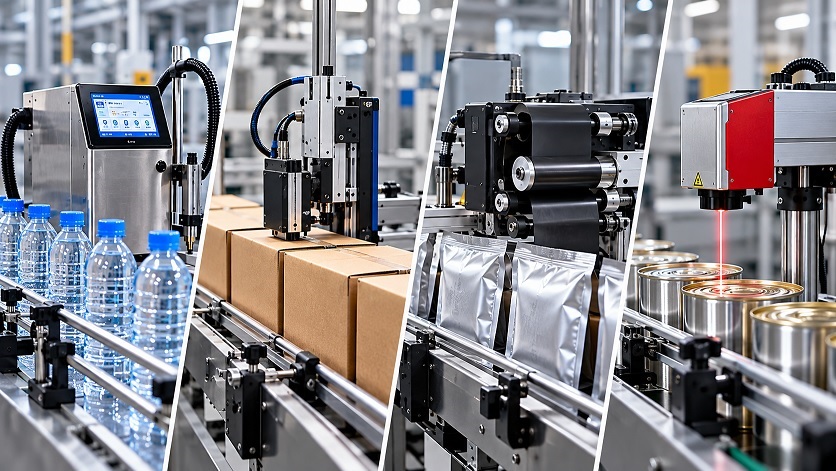
In the production process, every product needs to carry information that is easy to identify and trace. Batch numbers, lot numbers, production dates, expiry dates, barcodes, and QR codes are some of the information commonly printed on products or their packaging.
For this purpose, industries use batch coding machines, which are machines designed to automatically print product identification information on production lines.
Choosing the right machine should not be based solely on price. Packaging material, production speed, the type of code to be printed, character size, and the required level of print permanence all need to be considered. A technology that works well for plastic bottles, for example, may not necessarily be the best choice for pouches or cartons.
What Are Batch Coding Machines?
Batch coding machines are machines used to print specific information on products or packaging as part of the production and identification process.
The information that can be printed includes:
- Batch number
- Lot number
- Production date
- Expiry date
- Product code
- Barcode
- QR code
- Serial number
- Other production information
Using a coding machine allows the printing process to be carried out more consistently than manual methods. The machine can also be integrated into a production line so that information can be printed while products move through the production process.
Why Is Batch Coding Important?
Batch coding is not simply about printing text on packaging. The information printed on a product can help companies identify and trace their products.
For example, when products from a particular batch need to be inspected, the batch number can help distinguish those products based on their production group.
In addition, production dates and expiry dates provide important information that needs to be displayed on product packaging.
For companies with high production volumes, automated printing can also help reduce manual work and maintain consistency in the information being printed.
Types of Batch Coding Machines
Not every batch coding application requires the same technology. Some commonly used technologies include Continuous Inkjet (CIJ), Thermal Inkjet (TIJ), Thermal Transfer Overprinter (TTO), and laser marking.
1. CIJ Printer
Continuous Inkjet (CIJ) is one of the technologies widely used for coding applications on high-speed production lines.
CIJ can be used to print information such as batch numbers, production codes, and expiry dates on various types of surfaces.
This technology can be a suitable choice when companies need a flexible machine capable of keeping up with continuous production processes.
For these applications, Aga Prima provides CIJ printer solutions that can be used for various industrial coding and marking requirements.
2. TIJ Printer
Thermal Inkjet (TIJ) uses thermal inkjet technology to produce high-resolution prints.
TIJ can be considered for printing codes, dates, barcodes, and other information on suitable materials.
One of its advantages is its relatively sharp print quality, making it suitable when information needs to be printed in small characters while maintaining good readability.
Aga Prima provides Thermal Inkjet Printer solutions, including systems that can be used to print product codes, expiry dates, batch numbers, and barcodes.
For production processes that use cartons or certain packaging materials, TIJ can be one of the technologies worth considering.
3. TTO Printer
For industries that use flexible packaging, such as films, pouches, and other flexible materials, Thermal Transfer Overprinter (TTO) technology can be an option.
TTO uses a ribbon to transfer information onto the surface of the packaging material.
This technology is worth considering when coding requirements are closely related to packaging processes that use flexible materials.
Because material characteristics have a significant impact on coding results, selecting a TTO system should take into account the type of film or packaging material used in the production process.
4. Laser Coding Machine
Laser technology can be an alternative when companies require permanent marking on certain materials.
Unlike ink- or ribbon-based technologies, laser marking directly marks the surface of a material using laser energy.
The type of laser should still be selected based on the material being marked and the desired marking characteristics.
Aga Prima also provides industrial laser printer solutions for marking applications across various industries.
CIJ, TIJ, TTO, or Laser: Which One Is Right for You?
There is no single technology that is always the best choice for every application. The selection depends on the characteristics of the production line and the material being used.
| Technology | Suitable For | Key Considerations |
|---|---|---|
| CIJ | Various products and surfaces | Speed and flexibility |
| TIJ | Packaging and certain surfaces | Print quality and readability |
| TTO | Film and flexible packaging | Packaging material characteristics |
| Laser | Permanent marking | Material and permanent marking requirements |
The table above provides a general overview. In practice, machine selection should still take into account the actual conditions of the production line.
How to Choose a Batch Coding Machine
Before purchasing a coding machine, there are several important factors to consider.
Product or Packaging Material
First, determine the surface where the code will be printed. Is it plastic, glass, metal, carton, film, or another material?
The characteristics of the surface can determine which coding technology is most suitable.
Production Line Speed
High-speed production lines require machines that can keep up with production speeds without compromising print consistency.
Therefore, information such as the number of products per minute or conveyor speed should be considered before selecting a machine.
Type of Information to Be Printed
Not every company only needs a batch number. Some may require a combination of production dates, expiry dates, barcodes, QR codes, and other information.
The more complex the information requirements, the more important it is to ensure that the machine has the appropriate printing capabilities.
Print Size and Resolution
Consider the character size required on the packaging. If information needs to be printed in a small size while remaining easy to read, resolution and printhead technology become important considerations.
Permanence Requirements
If the company requires markings that are difficult to remove, laser technology can be one option to consider.
Meanwhile, coding applications using ink or ribbon can use inkjet or TTO technology depending on the material and application.
Operating Costs
Do not consider only the initial purchase price of the machine. Ink, ribbon, maintenance, spare parts, consumables, and downtime costs should also be taken into account.
For high-volume production, the operating cost per print can have a significant impact on the total cost of using the machine over the long term.
Batch Coding for Various Industries
Batch coding is used across various industries that require product identification.
Some examples include:
- Food & beverage for production dates, expiry dates, and batch numbers.
- Pharmaceuticals for product information and batch identification.
- Cosmetics for batch and production information.
- Packaging for coding on various types of packaging materials.
- Consumer goods for product codes and production information.
- Manufacturing for component and product identification.
The requirements of each industry can vary. Therefore, machines should be selected based on the production process and material being used, rather than solely on the name of the technology.
Batch Coding Solutions from Aga Prima
Aga Prima provides various coding and marking solutions for industrial applications, including CIJ printers, TIJ printers, TTO systems, and laser printers.
With these technology options, batch coding requirements can be matched to the type of product, packaging material, production line speed, and information that needs to be printed.
In addition to machine supply, the selection of a coding solution should also take the overall production requirements into consideration. Consulting about the application, materials, and production line conditions can help companies determine the most suitable technology.
Conclusion
Batch coding machines help industries print important information such as batch numbers, lot numbers, production dates, expiry dates, barcodes, and QR codes on products or packaging.
The technology used can vary depending on the application. CIJ can be considered for flexible coding requirements and high-speed production lines, TIJ for sharp and high-quality printing on suitable materials, TTO for flexible packaging, and laser for permanent marking applications.
Before selecting a machine, make sure to evaluate the material, production speed, type of information, print size, permanence requirements, and operating costs.
With the right technology selection, the batch coding process can become more integrated into the production line while helping maintain consistent product identification.